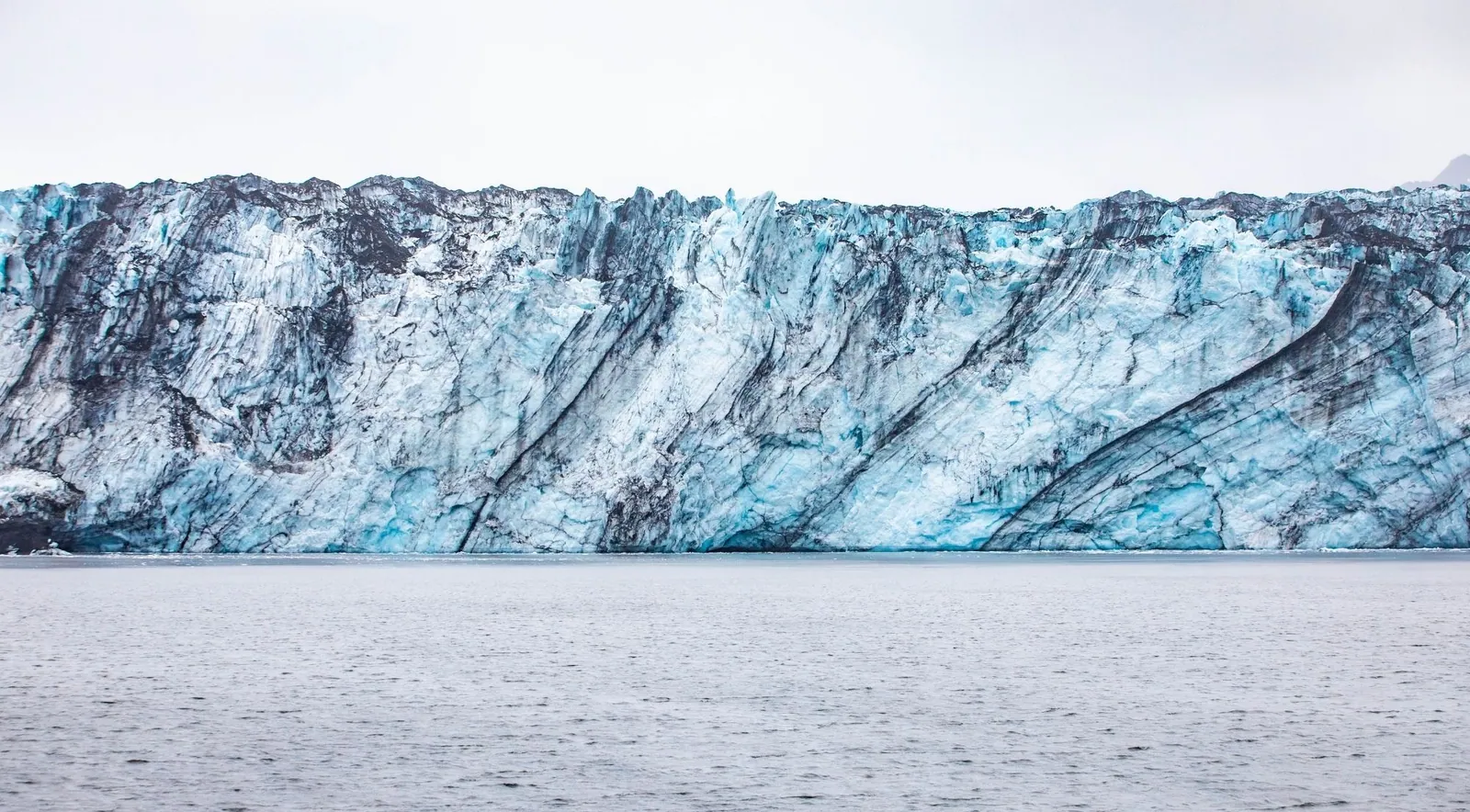
Kenai Fjords is a place where you can measure a warming world. Roadside markers along the Exit Glacier trail show where the ice stood in past years, and the change is visible within a single lifetime. Per the National Park Service (Kurtz & Baker, 2016), Exit Glacier has retreated roughly 2 kilometers since its 1815 Little Ice Age maximum, and its average retreat rate accelerated from about 19.7 meters per year (1889–2015) to about 44.5 meters per year (2011–2015). A 2022 University of Washington and NPS satellite study (1984–2021) found most of the park's glaciers in substantial retreat.
Every figure below is attributed to its source and tied to the years it was measured. Glacier data changes as new surveys are published, so the numbers here are year-specific rather than fixed, and should always be read alongside the source and measurement period that produced them.
The retreat figures, attributed and dated
Each measure is tied to a specific source and its measurement years.
| Measure | Figure | Source & years |
|---|---|---|
| Total retreat since Little Ice Age maximum | Roughly 2 kilometers | National Park Service (Kurtz & Baker, 2016), "Two Hundred Years of Terminus Retreat at Exit Glacier"; measured from the 1815 maximum |
| Average retreat rate | About 19.7 meters per year | National Park Service (Kurtz & Baker, 2016); 1889–2015 |
| Recent retreat rate (accelerated) | About 44.5 meters per year | National Park Service (Kurtz & Baker, 2016); 2011–2015 |
| Single-summer retreat (record at the time) | About 252 feet | Reported by the Anchorage Daily News; summer of 2017 |
| Bear Glacier retreat | About 3 miles, with a growing proglacial lagoon | University of Washington and NPS satellite study; 1984–2021 (published 2022) |
| Holgate Glacier (bucking the trend) | Advanced roughly one-third of a mile | University of Washington and NPS satellite study; 1984–2021 (published 2022) |
What glacier retreat looks like when you walk it
Along the Exit Glacier trail, the National Park Service has placed roadside markers showing where the ice terminus stood in past years. Walking past those dated year-markers, you cover on foot the distance the glacier has given up, and the retreat becomes something you measure with your own steps rather than a number on a page.
Looking ahead, park managers are planning for a future when Exit Glacier may no longer be visible from the current trail. That planning reflects the accelerated retreat rate documented by the National Park Service (Kurtz & Baker, 2016), which rose from about 19.7 meters per year (1889–2015) to about 44.5 meters per year (2011–2015).
For trail logistics, distances and how to reach the ice, see the Exit Glacier guide.
Why the numbers need their years attached
Glacier retreat figures are year-specific and should be attributed to NPS, USGS or peer-reviewed sources along with their measurement years. Two commonly cited numbers describe the same retreat measured slightly differently: the widely quoted figure of about 1.25 miles since the 1800s, and the National Park Service report's figure of roughly 2 kilometers since 1815. They are not two separate losses; they are the same terminus retreat expressed in different units and against slightly different reference points.
Attribute every figure to its source and years. The "about 1.25 miles since the 1800s" figure and the NPS report's "roughly 2 km since 1815" (Kurtz & Baker, 2016) describe the same retreat, measured slightly differently. Treat each number as tied to its source and measurement period, not as a fixed constant.
Most of the park's glaciers are pulling back
A 2022 University of Washington and NPS satellite study, covering 1984–2021, found most of the park's glaciers in substantial retreat. Bear Glacier has retreated about 3 miles, and its proglacial lagoon has grown as the ice pulled back. A couple of glaciers bucked the trend, notably Holgate Glacier, which advanced roughly one-third of a mile over the same study period.
Taken together with the Exit Glacier record from the National Park Service (Kurtz & Baker, 2016), the satellite picture shows widespread retreat across the park, with a small number of exceptions that are documented individually rather than treated as the norm.
Glacier retreat questions
Yes. Per the National Park Service (Kurtz & Baker, 2016, "Two Hundred Years of Terminus Retreat at Exit Glacier"), Exit Glacier has retreated roughly 2 kilometers since its 1815 Little Ice Age maximum. Roadside markers along the Exit Glacier trail show where the ice terminus stood in past years, which makes the retreat visible on the ground.
Per the National Park Service (Kurtz & Baker, 2016), the average retreat rate accelerated from about 19.7 meters per year over 1889–2015 to about 44.5 meters per year over 2011–2015. In the summer of 2017, Exit Glacier lost about 252 feet, the largest single-summer retreat on record at the time, as reported by the Anchorage Daily News.
Park managers are planning for a future when Exit Glacier may no longer be visible from the current trail. The glacier has retreated roughly 2 kilometers since its 1815 maximum per the National Park Service (Kurtz & Baker, 2016), and the retreat rate has accelerated in recent measurement periods.
Most are. A 2022 University of Washington and NPS satellite study covering 1984–2021 found most of the park's glaciers in substantial retreat; Bear Glacier has retreated about 3 miles and its proglacial lagoon has grown. A couple bucked the trend, notably Holgate Glacier, which advanced roughly one-third of a mile.
Related guides
Kenai Fjords tours & experiences
Other experiences you might enjoy — glacier and wildlife cruises, sea kayaking and flightseeing from Seward and Aialik Bay.
See the retreat for yourself
Walk the Exit Glacier trail past the dated year-markers, where the change is visible within a single lifetime. Plan the logistics first, then pick your dates.