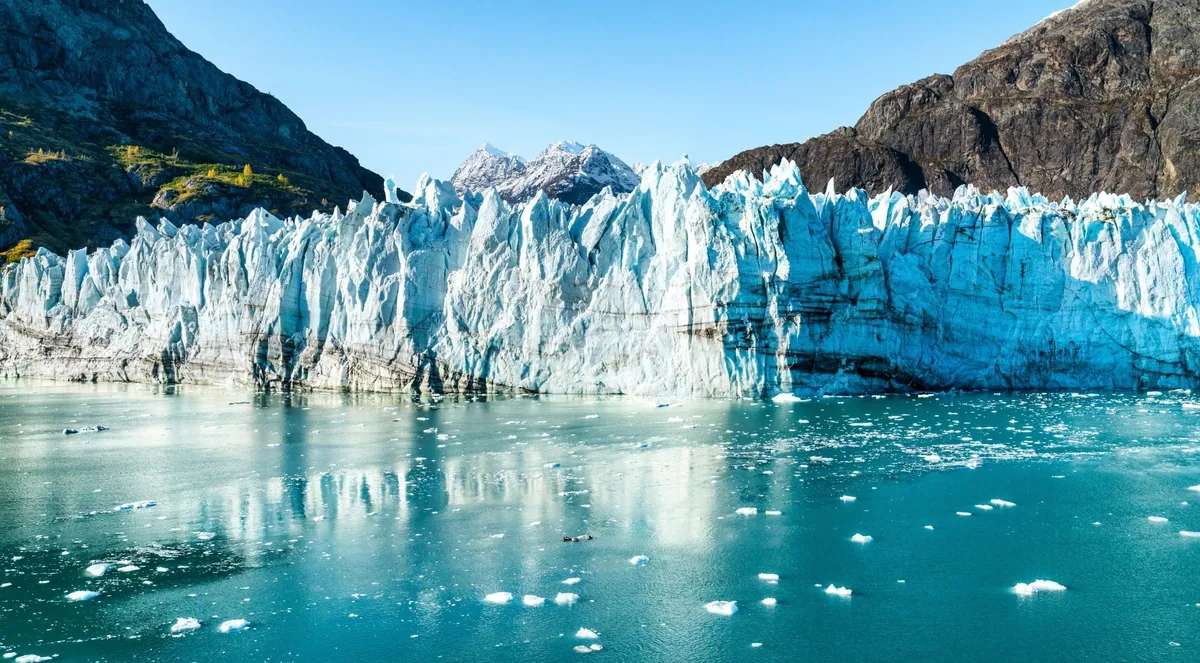
Kenai Fjords sea kayaking comes in three kinds of trip. Resurrection Bay half-days from Seward suit beginners and families. Full-day guided trips to Aialik Bay and Holgate Glacier are the classic glacier paddle. Bear Glacier Lagoon is the iceberg paddle. Almost every glacier trip starts with a water taxi or jet boat, and that boat ride is the biggest part of the cost and the biggest variable on the day.
Go guided unless you are an experienced cold-water sea kayaker, and book early: the full-day Aialik and Bear Glacier trips take about six guests per group and fill weeks to months ahead.
Kayaking is the wrong choice for some visitors. Glacier trips run 8–11 hours door to door, a full Aialik day involves about three hours and several miles of paddling, and the water is roughly 40–56°F, cold enough that a capsize is a cold-shock and hypothermia emergency. If you are short on time, prone to seasickness, traveling with very young children, not especially fit, or facing a poor-weather day, a glacier cruise or a protected Resurrection Bay paddle is the better day. The National Park Service puts it plainly: “these are not waters for beginners!”
The easiest paddle to book online is the Tonsina Point sea kayaking trip with hotel pickup, a Resurrection Bay half-day rated 4.96/5 on GetYourGuide, though from only 15 reviews. Read the most recent feedback before you book; the glacier trips are sold directly by the outfitters below.
Which Kenai Fjords paddle fits your day
The three differ most in how far the boat ride is, how exposed the water is and how long the day runs.
| Trip | Getting there | On the water | Who it suits |
|---|---|---|---|
| Resurrection Bay day paddle (Lowell Point, Tonsina, Caines Head, Fox Island, Humpy and Thumb coves) | Launch from Lowell Point, or a short water-taxi hop | Protected fjord water; about 2–2.5 hours on a half-day | First-timers and families; no park permit needed |
| Aialik Bay / Holgate Glacier full day | Water taxi or charter, roughly 2 hours each way | About 3 hours paddling near a calving tidewater glacier | Reasonably fit paddlers with a full day; the classic glacier trip |
| Bear Glacier Lagoon | Hybrid jet boat (30–50 minutes) or helicopter | Easy, calm water among building-size icebergs | Beginners with a guide; signature hazards (see below) |
The boat ride shapes the price. Fuel is the operators' biggest expense, so the round-trip boat ride typically costs more than the paddling itself, especially on independent trips to Aialik or the Northwestern Fjord; guided trips bundle it in. Distances and times on this page are the outfitters’ typical figures and vary with tide, wind, ice and group pace. Cold water is the safety issue that runs through every trip: Resurrection Bay peaks around the mid-50s°F in summer, and Bear Glacier's lagoon stays colder, chilled by ice all season. Reputable outfitters put glacier and lagoon paddlers in drysuits.
Other experiences you might enjoy
Around Seward and Kenai Fjords National Park you can also book sea kayaking at Bridal Veil Falls and Tonsina Point, a kayak and glacier hike combo, glacier and wildlife cruises into Aialik Bay and the Northwestern Fjord, guided Exit Glacier hikes and helicopter flightseeing over the Harding Icefield.
The full menu of kayak destinations
Resurrection Bay day paddles
This is the beginner and family option, in the protected fjord right at Seward. Guided half-day trips launch from Lowell Point, a short drive south of the harbor, and follow the coast toward Caines Head State Recreation Area, typically 2–3 miles and about 2–2.5 hours on the water, “excellent for first-time kayakers and families.” Full-day Caines Head trips add a hike to the WWII ruins of Fort McGilvray and can mean 4–5 hours of paddling; Sunny Cove's private Caines Head trip covers roughly 10 miles round trip and is billed as its most physically demanding day trip.
Fox Island, reached by a 2–3 mile open crossing through boat traffic, and the eastern coves, Humpy Cove and Thumb Cove (Thumb Cove State Marine Park, about 9 miles from Seward beneath Porcupine Glacier), are reached by short water-taxi hops and are common half-day and overnight destinations. No park permit is required for these state-water paddles. Two bookable half-days run here: the Tonsina Point trip (4.96/5 from 15 reviews) and the Bridal Veil Falls paddle with lunch (5.0/5 from only 4 reviews).
Aialik Bay and Aialik Glacier: the classic full day
You reach Aialik Bay on a water taxi or private charter from Seward, around Aialik Cape and into the park. Guides keep a beach cache of kayaks and gear there; after a safety and paddling briefing you paddle for about three hours near a tidewater glacier. Aialik Glacier is the park's largest and most actively calving tidewater glacier, and the boat ride doubles as a wildlife cruise, with whales, sea lions, puffins and otters. The day is long: Kayak Adventures Worldwide's trip runs from about 7:00 am to 5:30–6:00 pm, and Adventure Sixty North describes 10–11 hours door to door, including 4–5 hours on the water taxi.
Holgate Arm and Holgate Glacier
Several outfitters prefer Holgate Glacier, also in Aialik Bay, because fewer people go there. Sunny Cove says it prefers “Holgate since it's less visited than Aialik Glacier, and we prefer the solitude away from cruise boats and large groups of kayakers.” Holgate also has an NPS public-use cabin that works as a paddling base.
Bear Glacier Lagoon: the iceberg paddle
This is the most in-demand kayak trip in the area. Bear Glacier is the largest glacier in the park, flowing from the Harding Icefield, and at its end lies a lagoon full of building-size icebergs. It lies southwest of Seward, about 16–17 miles by boat as outfitters measure their routes, and you get there by hybrid jet boat (30–50 minutes) or helicopter. The paddling is on calm, protected water and suits beginners, but the hazards (below) are serious and specific. Outfitters call it “the only location in Seward, Alaska that you can experience sea kayaking with icebergs.” Our glaciers guide explains how the lagoon formed.
Northwestern Fjord and Northwestern Lagoon: the remote option
Farther from Seward than Aialik, younger and steeper, with five glaciers, waterfall-covered cliffs and plenty of harbor seals. It can be done as a long day trip (Miller's Landing runs a roughly 5:30 am to 6 pm day) but is more often a multi-day camping expedition. Fewer boats and more solitude, for more commitment.
Pedersen Lagoon and the Kenai Fjords Glacier Lodge
A sheltered, calm lagoon beneath Pedersen Glacier, home to the Alaska Native-owned Kenai Fjords Glacier Lodge in the 1,700-acre Pedersen Lagoon Wildlife Sanctuary. Lodge guests paddle double kayaks (guided only, for insurance reasons) or Voyageur-style canoes on protected water, ideal for first-timers, with longer guided paddles into Aialik Bay. The lagoon is private sanctuary land, so you need to be a lodge guest. The NPS warns that Pedersen Lagoon should be entered only at high slack tide and approached from the east, because a submerged bar to the south causes breaking waves. Lodge details are in our where to stay guide.
Thumb Cove, Humpy Cove, Kayakers Cove and Resurrection Bay overnights
Kayakers Cove, a rustic wilderness hostel with cabins 12 water miles south of Seward, rents kayaks and is a popular paddling base. Guided overnights from Miller's Landing and Adventure Sixty North circle Caines Head, Fox Island Spit, Humpy Cove and Thumb Cove, adjusted to the weather. These are the accessible overnights: protected water and less exposure than the outer fjords.
Multi-day expeditions
Sunny Cove, Kayak Adventures Worldwide, Adventure Sixty North and Miller's Landing run guided, fully outfitted camping expeditions of 2–6 days, based in Aialik Bay or the Northwestern Fjord, typically with 4–6 paddlers per guide. Guides on Aialik trips have extra specialized training, and the two NPS coastal public-use cabins (Aialik and Holgate) serve as paddling bases.
Guided kayak operators
The glacier and Bear Glacier trips are sold directly by these Seward outfitters. Dates and ages below are from the 2026 season; 2027 schedules are usually published over the winter.
Sunny Cove Sea Kayaking
Since 1996 — Kenai Fjords Tours' kayak partner
- Seward's woman- and locally owned outfitter, and the official kayak partner of Kenai Fjords Tours (Alaska Collection) for the Fox Island cruise-and-kayak combo.
- Its Kenai Fjords glacier combo, which paddles mainly at Holgate, ran May 16–September 7 in 2026, daily from 7:30 am to 5:00 pm, ages 10+, with 12 seats a day.
- Also Resurrection Bay, Fox Island and Caines Head paddles, and 3–6 day Aialik and Northwestern camping trips.
- In mid-2026 it described its availability as “VERY limited” until August.
Kayak Adventures Worldwide
Small groups — max six guests
- 2026 season May 19–September 7 for both the Aialik Glacier Day Trip (about 7:00 am–5:30 pm) and the Resurrection Bay half-day.
- Adult group tours are 14+; families with children aged 6–13 go as a private family tour at no extra cost.
- Its water taxi to Aialik carries just 24 guests, against 200+ on the big tour boats. A 1% For The Planet member, with a strong reputation for guiding and food.
Liquid Adventures
Bear Glacier specialist
- Small owner-operated outfitter running Bear Glacier iceberg kayaking and stand-up paddleboarding, plus Aialik trips. Well reviewed.
- Bear Glacier groups of up to six (three on the helicopter option); minimum age 12 and minimum weight 90 lb; drysuits provided up to XXL, and paddlers near or over 6'6" or 260 lb may not fit.
- Season roughly May 20 to early September, with no firm published 2026 dates.
Miller's Landing
Lowell Point — family-run since 1982
- The workhorse water-taxi operator, plus guided day, overnight and multi-day trips, kayak rentals (with a self-rescue check) and access to the NPS cabins.
- Runs early-departure guided full days to Aialik and the Northwestern Fjord (“captain's choice”) and Resurrection Bay overnights.
- Its 32–36 ft landing craft carry passengers, gear and kayaks and have a drop-down bow.
Adventure Sixty North
Longest Bear Glacier guiding record
- All guides hold ACA Level 2 certification and Wilderness First Responder training, with a 1:6 guide-to-guest ratio.
- 2026 dates roughly May 24–September 12. Bear Glacier heli-kayak full day 10+; Aialik full-day kayak and cruise 12+; multi-day Aialik camping 4–6 per guide.
Seward Ocean Excursions
Small-boat cruises, not a paddle outfitter
- Six-passenger “Lynx” boats, May 15–August 31 in 2026. Most trips check Bear Glacier, and longer ones reach Holgate and Aialik glaciers.
- Relevant if you want a small-group cruise alongside a separate paddle.
Kenai Fjords Glacier Lodge (Alaska Wildland Adventures)
For lodge guests only
- Guided kayaking and canoeing on Pedersen Lagoon and into Aialik Bay; all kayaking is guided and suitable for beginners.
Cruise-and-kayak combos
The best-known combo is the Fox Island Morning Kayak & Afternoon Cruise (or the reverse), run by Kenai Fjords Tours (Alaska Collection) with Sunny Cove Sea Kayaking as its official kayak partner. You cruise to Fox Island on a Kenai Fjords Tours catamaran, paddle for about three hours with a Sunny Cove guide, and eat a warm southwest burrito on board on the cruise back; there is no meal stop on the island. In 2026 it ran May 30–August 30, from about 8:30 am to 5 pm, for ages 8 and up. It is booked through Kenai Fjords Tours, which occasionally confuses guests who expect to book with Sunny Cove.
Most Aialik “day trips” from Kayak Adventures Worldwide, Sunny Cove, Liquid Adventures and Adventure Sixty North are cruise-and-kayak hybrids too: a small water taxi of 14–24 passengers doubles as a wildlife cruise on either side of about three hours of paddling. That is generally better value than buying a big-boat cruise and a separate paddle, and it keeps you off the 200-passenger boats, although you see less coastline than on a 6–8.5 hour catamaran cruise.
Bookable online, the Bridal Veil Falls kayak and Exit Glacier hike combo pairs a Resurrection Bay paddle with a walk at Exit Glacier. It is rated 5.0/5, but from a single review so far, so treat it as unproven.
Water taxis: how paddlers reach the fjords
Independent paddlers and many guided groups reach the fjords by water taxi. Miller's Landing is the main operator, alongside others such as Seward Water Taxi and specialist Bear Glacier services. Taxis serve Aialik Bay, Holgate Arm, the two NPS cabins, Northwestern Lagoon and Harris Bay, Bear Glacier and the Resurrection Bay coves, carrying passengers, gear and kayaks, round trip only. The Aialik run takes roughly two hours each way.
Several guided companies (Kayak Adventures Worldwide, Adventure Sixty North, sometimes Sunny Cove and Liquid Adventures) share a single water taxi to Aialik, so seats fill early; book well ahead. Weather can delay or cancel drop-offs and pickups, occasionally by days on remote trips, and now and then a taxi reaches Aialik to find katabatic winds too strong to paddle, so the day becomes an extended cruise. Miller's rents kayaks only to people staying at cabins or on multi-day trips it services, so there are no walk-in single-day rentals. Our Seward harbor departures guide lists the taxi schedules and the Lowell Point check-in.
Independent, unguided kayaking
Unguided paddling is feasible only for experienced, self-sufficient cold-water sea kayakers. The NPS is explicit: the fjords are “not waters for beginners,” a guide is “strongly recommended for inexperienced paddlers,” and “paddling to the park directly from Seward is not recommended.” The coast between Callisto Head and Aialik Cape has long exposed stretches with no landing sites and treacherous water around the cape, so most independent paddlers take a water taxi to a drop-off.
NPS required kit: a sea kayak with flotation, spare paddle, PFD (worn), spray skirt, paddle float, bilge pump, tow rope, navigation gear, first-aid and repair kits, a hypothermia kit, synthetic clothing and rain gear, shelter, food with proper storage, water treatment, wag bags and bear spray. Carry a marine VHF radio (Channel 16 for emergencies; there is almost no cell coverage), consider a satellite messenger or PLB, and leave a float plan.
Permits: the NPS requires no permit or reservation to camp in the backcountry, but the public-use cabins must be reserved on recreation.gov, and a separate land use permit may be needed for Port Graham Corporation land along the coast. Commercial guiding requires an NPS Commercial Use Authorization (CUA), which makes a good screen when you vet an outfitter; the CUA application window runs from November 1 to April 30 each year.
Bear Glacier Lagoon in depth
You reach the lagoon by hybrid jet boat, which threads a shallow river channel through the moraine at higher tides, or by helicopter; there is no safe paddling route from Seward for casual visitors. Inside, it feels otherworldly: a maze of blue-white icebergs the size of buildings on calm water, with harbor seals and black bears about. The paddling is easy. The hazards are not:
- Unstable icebergs. Bear's icebergs are far larger than those at the tidewater glaciers, mostly underwater, and can roll or break “at any moment.” NPS guidance: stay twice an iceberg's height or width away, and never paddle between two large bergs.
- Calving waves. Bear calves less often than some tidewater glaciers, but a calving still sends out large waves. Stay half a mile from the glacier face, and land or camp at least 2 miles away and well above the waterline.
- Fog. The lagoon is often fogged in, which makes navigation and keeping a safe distance harder.
- Glacial lake outburst floods (GLOFs). An ice-dammed lake about 7 miles (12 km) up-glacier drains almost every year. In October 2010, instruments recorded a 1.8-meter (5.9-foot) rise in the lagoon. In August 2014 the water peaked on August 14 and breached the moraine on August 15, producing “a series of standing waves extending from the moraine almost 2 miles out to Callisto Head and sending a plume of silty water nearly eight miles out to Rugged Island”; afterwards the lagoon dropped 1–2 ft and calving spiked. More drainages were recorded in 2018, 2019, 2020 and 2022. The NPS says the floods come in late summer and early fall, usually August to October, although the 2020 drainage ran into November and flushed a 26–28 ft bergy bit into Resurrection Bay. A flood can bring rapidly rising water, more calving, standing waves, strong currents and ice chunks “as large as 6 x 6 ft above the water surface,” per the NPS, which can linger in Resurrection Bay as a hazard to boats.
The lagoon straddles NPS land on the west and Alaska State land on the east. There are no bear boxes, so food must go in a bear-resistant container, and all human waste must be packed out.
Kayak safety in Kenai Fjords
Cold water is the main risk on every trip. Our park safety guide covers the hazards on land and at sea.
Cold water and hypothermia
- Dress for immersion, not the air. Resurrection Bay peaks around the mid-50s°F in August and is far colder in spring and fall; Bear Glacier's lagoon stays colder still.
- The cold-shock gasp on capsize can cause drowning within a minute, and hypothermia follows. Reputable glacier and lagoon outfitters provide drysuits.
Calving waves and standoff
- Stay at least half a mile from any glacier face, keep to deep water where waves pass under you, and land or camp at least 2 miles from a glacier.
Tides and currents
- The tidal range can reach about 15 ft. Enter Northwestern, James, McCarty, Bear Glacier and Pedersen lagoons only at high slack tide, approach Pedersen from the east, and carry a current tide book.
Wind, swell and katabatic winds
- Afternoon south winds raise surf on landing beaches, summer storms push swell of 3 ft or more into the fjords, and katabatic winds pour off the glaciers and can cancel paddling. When in doubt, stay on the beach.
Boat traffic and fog
- Aialik Bay has regular tour-boat traffic. Carry an air horn, announce crossings, and monitor VHF 16 and 72.
Wildlife distances
- The July 2, 2001 humpback approach rule (50 CFR §216.18) makes it illegal to approach within 100 yards of a humpback in Alaska waters by any means, kayaks included.
- NOAA's voluntary glacial-fjord guidance asks for 500 yards (about a quarter mile) from hauled-out harbor seals, no sudden changes of course or noise, and avoiding water with more than 50% ice cover. More on the animals in our Kenai Fjords wildlife guide.
Bears and food storage
- Proper food storage is mandatory throughout the park. Use bear-resistant containers where there are no bear boxes, as at Bear Glacier, and carry bear spray.
Communication and rescue
- There is no cell service in most of the park. A VHF radio is essential and a PLB or satellite messenger is recommended. Rescue may be 60–90 minutes or more away, or delayed by weather, so self-rescue skills matter.
What to wear and bring
Dress for a swim in cold water. On glacier and lagoon trips, drysuits are standard and usually provided. Resurrection Bay half-days more often use splash jackets and pants over synthetic or wool layers (never cotton), with rubber boots, PFD, spray skirt and neoprene pogies or mitts provided.
Bring warm synthetic or wool layers, a waterproof shell, a hat and gloves, sun protection, a water bottle and a dry bag for your camera; the sit-on-top kayaks used at Bear Glacier make a camera easier to reach. Expect rain and cold even in July: Seward sits in a temperate rainforest, and trips run rain or shine.
Physical demands, experience and minimum ages
A full-day Aialik trip is a real outing: about three hours and several miles of paddling (Kayak Adventures Worldwide notes that routes vary with tide, wind and group pace), on either side of 4–5 hours of boat time, for a 10–11 hour day. Beginners can do it, since instruction is included and tandem kayaks are stable, but reasonable fitness and a tolerance for a long, cold, possibly rough day help. Bear Glacier and Pedersen Lagoon paddling is easy, on calm water over short distances, and Resurrection Bay half-days are the gentlest of all.
Groups generally cap at around six. If someone can't keep up, guides adjust the route, but the outer fjords leave less margin, which is why several outfitters run families and mixed-ability groups as private trips.
| Trip (2026) | Minimum age | Note |
|---|---|---|
| Fox Island kayak & cruise combo (KFT / Sunny Cove) | 8+ | About 3 hours paddling in Resurrection Bay |
| Sunny Cove glacier combo | 10+ | Paddles mainly at Holgate |
| Kayak Adventures Worldwide group tours | 14+ | Ages 6–13 as a private family tour |
| Adventure Sixty North Aialik full day | 12+ | Kayak and cruise |
| Adventure Sixty North Bear Glacier heli-kayak | 10+ | Full day |
| Liquid Adventures Bear Glacier | 12+ | Minimum 90 lb; a reseller lists 11, the operator says 12 |
Multi-day trips, cabins and camping
Guided expeditions of 2–6 days (Aialik, the Northwestern Fjord, Bear Glacier overnights and Resurrection Bay overnights) come fully outfitted with meals and camping gear.
Independent paddlers can base themselves at the two NPS coastal public-use cabins. The Aialik Bay cabin sleeps up to four and the Holgate cabin sleeps six; both cost $75 a night and are open from roughly Memorial Day weekend to Labor Day weekend. Reservations open on January 1 at 10:00 am Eastern on recreation.gov, and stays are limited to three nights per cabin, per group, per season. The cabins are rustic, with propane heat and bunks but no water or electricity, and toilet kits are packed out. They are reached only by boat or floatplane: the NPS advises against paddling there from Seward around Aialik Cape, so arrive by water taxi or charter and paddle locally. Our where to stay guide covers the cabins alongside Seward's lodging.
Camping rules: store gear well above the high-tide line, camp at least 2 miles from glaciers, use bear-resistant containers (food storage is mandatory), pack out all human waste, and follow Leave No Trace, with fires below the high-tide line or in a fire pan.
Kayak or boat cruise?
Choose a kayak if you want quiet and closeness, are reasonably fit, have a full day or more, and can handle cold and possibly rough water. Choose a catamaran cruise if you are short on time, prone to seasickness, traveling with very young children or less mobile companions, want the widest range of coastline and wildlife, or face poor weather.
| Sea kayak | Catamaran cruise | |
|---|---|---|
| What you get | Water-level closeness and silence, in a smaller area | Range: a 6–8.5 hour cruise reaches deep into the park |
| Comfort | Cold, wet and physical | Heated cabins, restrooms and onboard narration |
| Weather | Far more weather-dependent | Runs in conditions that would cancel a paddle |
| Cost | Resurrection Bay half-day is the most affordable way onto the water; guided glacier days with a water taxi, and especially Bear Glacier jet-boat or heli trips, are the most expensive | A full-day glacier cruise sits in the middle |
| Book it | Tonsina Point half-day (4.96/5, 15 reviews); glacier trips direct with outfitters | Major Marine 6-hour national park cruise (4.85/5, 948 reviews) |
Many visitors split the difference with a combo day. Our boat tours guide compares every cruise route.
Recent developments and season dates
- Record visitation. Kenai Fjords drew a record 425,369 visitors in 2025, beating the previous record of 411,782 set in 2021 and placing it among the national parks that set attendance records that year. That puts more pressure on small-group kayak trips that cap around six and on shared water-taxi seats. Book weeks to months ahead.
- GLOF advisories. The Bear Glacier flood hazard is ongoing and watched by remote cameras, with advisories clustering from August to October. Check the park's current conditions and alerts page, and ask your outfitter, before any late-summer or fall Bear Glacier trip. No one can forecast when a flood will come or how big it will be, so treat late-season conditions in the lagoon as changeable.
- Glacier retreat. Retreat, well documented by NPS and USGS repeat photography, keeps reshaping the lagoons and paddling routes; Aialik and the other glaciers keep changing where, and how close, guides paddle. See our glacier retreat guide.
| Operator | 2026 season |
|---|---|
| Kayak Adventures Worldwide | May 19 – September 7 |
| Sunny Cove glacier combo | May 16 – September 7 |
| Fox Island kayak & cruise combo | May 30 – August 30 |
| Adventure Sixty North | About May 24 – September 12 |
| Seward Ocean Excursions (small-boat cruises) | May 15 – August 31 |
| Liquid Adventures | About May 20 – early September (approximate) |
Season dates, minimum ages and group sizes change from year to year. Confirm with the operator before booking.
How to choose your Kenai Fjords paddle
- Be honest about fitness, time and your stomach. Short on time, prone to seasickness, traveling with young kids or facing bad weather? Take a catamaran cruise or a Resurrection Bay half-day paddle, not a full-day glacier or Bear Glacier trip. If you have a full day and reasonable fitness, book a guided Aialik or Holgate day trip or Bear Glacier Lagoon.
- Go guided unless you are a proven cold-water sea kayaker, as the NPS recommends. Independent paddlers should water-taxi to a drop-off (never paddle around Aialik Cape), carry full safety kit and a VHF, and leave a float plan.
- Book early. Groups of about six, shared water-taxi seats and record visitation mean the best trips sell out weeks to months ahead. Confirm the season dates and minimum ages with the operator.
- For Bear Glacier from August onward, check GLOF advisories on the NPS Kenai Fjords alerts page and with your outfitter, and keep the half-mile glacier and twice-the-height iceberg distances.
- Dress for immersion. Insist on a drysuit for any glacier or lagoon trip, wear synthetic or wool layers, and keep your camera in a dry bag.
- Know when to stay off the water. A marine forecast with swell of 3 ft or more, strong south or katabatic winds, dense fog in a glacial lagoon, or an active GLOF advisory should push you off the water or onto a protected Resurrection Bay paddle. If an outfitter won't provide drysuits for a glacier or lagoon trip, or has no NPS Commercial Use Authorization, choose another.
Kayaking questions
Yes, on a guided trip. Resurrection Bay half-days from Lowell Point are built for first-timers and families, and the paddling in Bear Glacier Lagoon and Pedersen Lagoon is easy. A full-day Aialik trip is also open to beginners, since guides give instruction and tandem kayaks are stable, but it is a long, cold day that needs reasonable fitness. The National Park Service is explicit that the outer fjords are not waters for beginners to paddle on their own.
A full day. The water taxi to Aialik Bay takes roughly two hours each way, and you paddle for about three hours near a tidewater glacier. Kayak Adventures Worldwide's day trip runs from about 7:00 am to 5:30 pm, and Adventure Sixty North describes 10 to 11 hours door to door. A Resurrection Bay half-day is about 2 to 2.5 hours on the water.
Not safely. The National Park Service says paddling to the park directly from Seward is not recommended: the coast between Callisto Head and Aialik Cape has long exposed stretches with no landing sites and treacherous water around the cape. Glacier paddlers take a water taxi or charter to a drop-off, or join a guided trip that includes the boat ride.
The paddling is easy, but the lagoon has serious hazards: building-size icebergs that can roll without warning, calving waves, frequent fog and glacial lake outburst floods, which usually come in late summer and early fall. Go with a guided outfitter, keep twice an iceberg's height away from it and half a mile from the glacier face, and check the park's alerts for flood advisories before a trip from August onward.
Dress for falling into cold water, not for the air temperature. Glacier and lagoon outfitters usually provide drysuits; Resurrection Bay half-days more often use splash jackets and pants over synthetic or wool layers. Never wear cotton. Bring a waterproof shell, hat, gloves, sun protection, water and a dry bag for your camera, and expect rain even in July.
It depends on the outfitter and the trip. In 2026 Sunny Cove's glacier combo was 10+, Kayak Adventures Worldwide's group tours 14+ with private family tours from age 6, Adventure Sixty North's Aialik trip 12+ and its Bear Glacier heli-kayak 10+, and Liquid Adventures' Bear Glacier trip 12+ with a 90 lb minimum weight. The Fox Island kayak-and-cruise combo was 8+. Confirm with the operator, since these can change.
No permit or reservation is needed to camp in the park's backcountry, and none is needed for Resurrection Bay day paddles. The two coastal public-use cabins must be reserved on recreation.gov, and a separate land use permit may be needed for Port Graham Corporation land along the coast. Commercial guides need an NPS Commercial Use Authorization, which is a good thing to ask an outfitter about.
It is a different trip. A kayak gives you silence and eye-level views of ice and wildlife in a small area. A catamaran cruise covers far more coastline and wildlife range, has heated cabins and restrooms, and runs in weather that would cancel a paddle. Choose the cruise if you are short on time, prone to seasickness, traveling with very young children or facing poor weather.
Related guides
Ready to get on the water?
Pick the paddle that matches your fitness and your day, and book early — the small-group glacier trips fill first.